
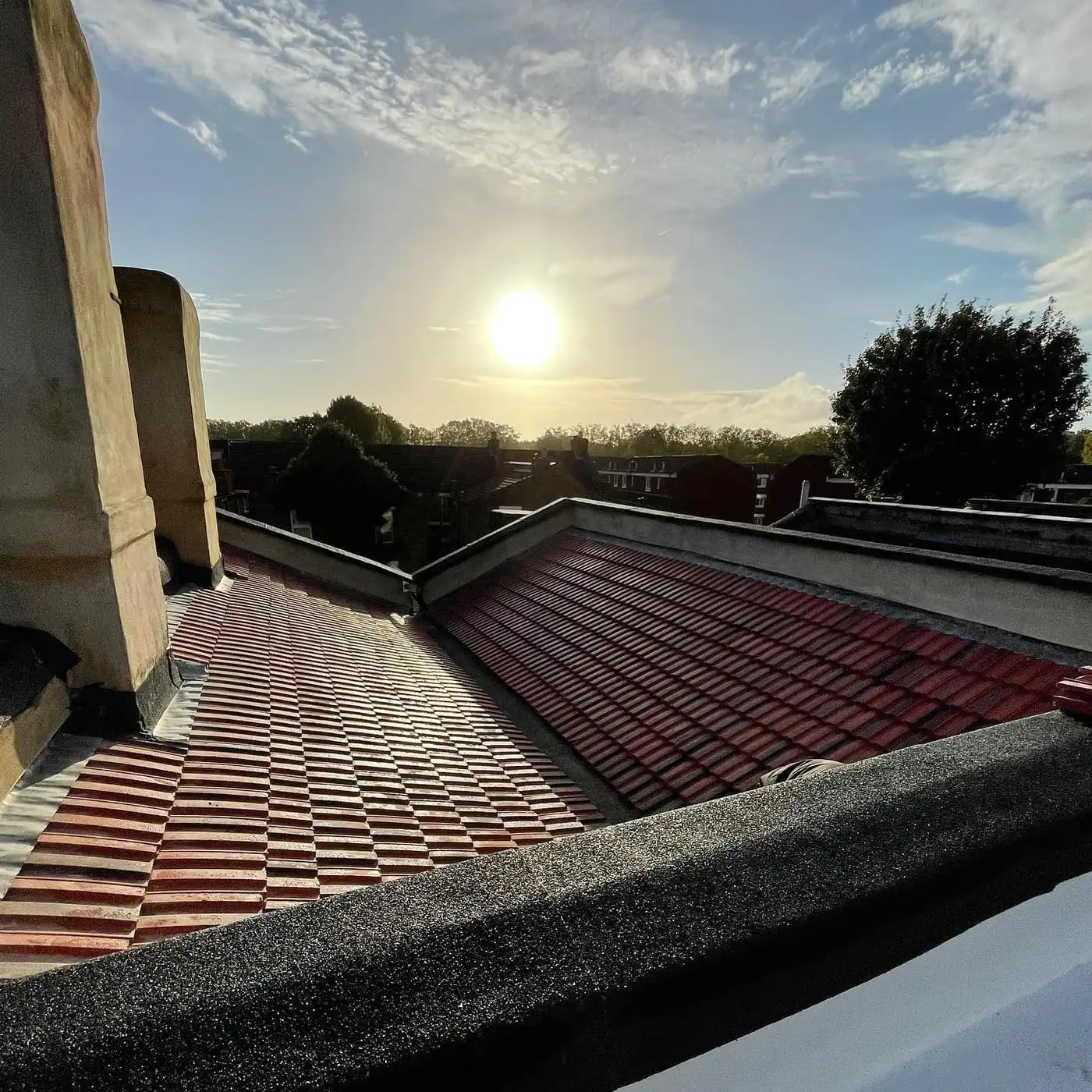
Pitched & tiled roofing in London
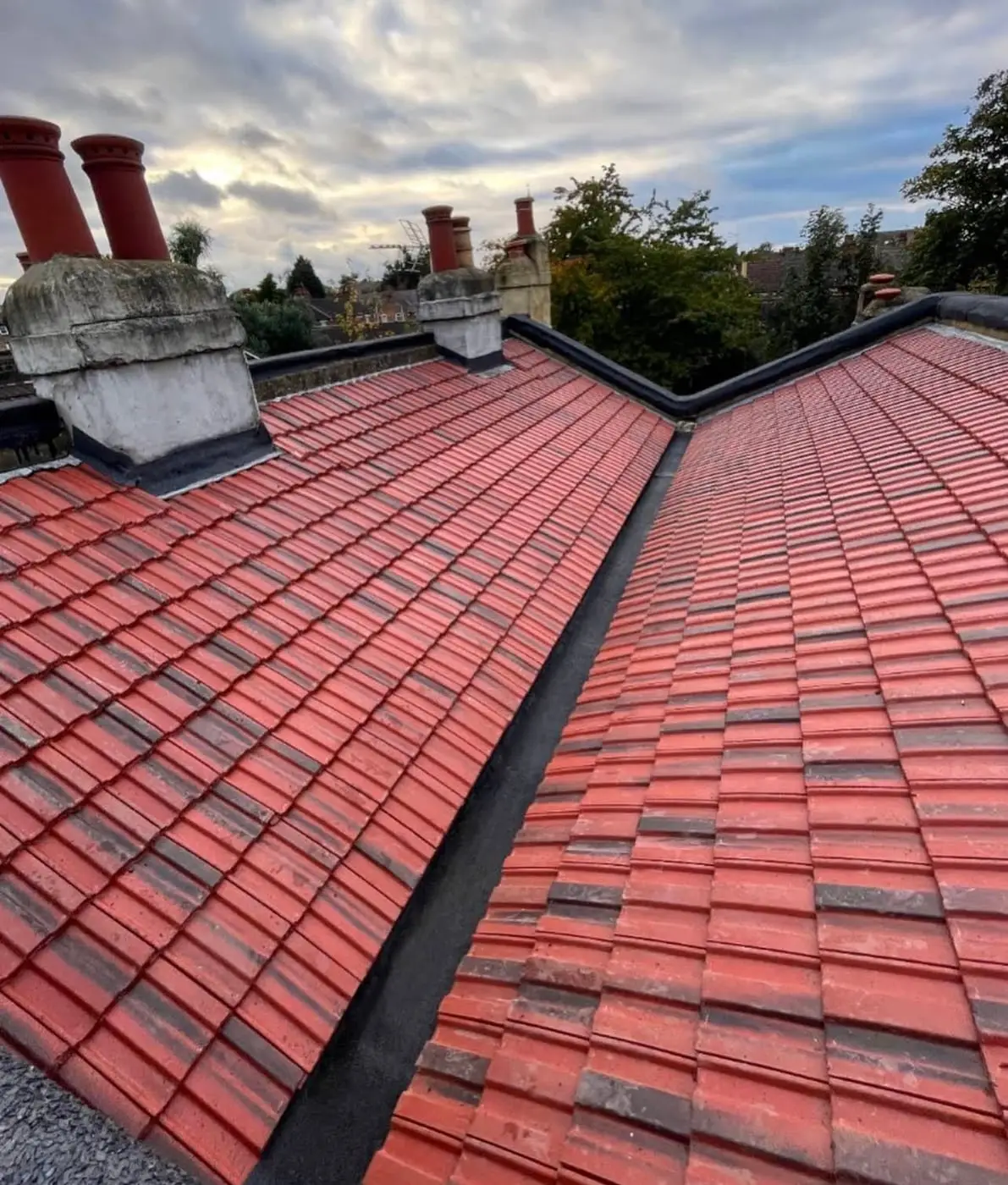
Tile and slate roofs stripped, re-laid and re-pointed using detailing that suits the building — whether that is a Victorian terrace with lead valleys or a modern semi with dry-fix ridges.
- Re-roofs and partial re-tiling
- Natural slate and clay tiles
- Period and modern properties
- 25 year guarantee
400+ Five-star reviews
Across Google, Checkatrade, TrustATrader & MyBuilder
30+ Years of experience
Roofing and exterior property care across the capital
25 yr Guarantee
Backed by premium materials and skilled workmanship
Free No-obligation quotes
Clear, itemised pricing with no hidden costs


How we work
Matched to the building, not just to the budget
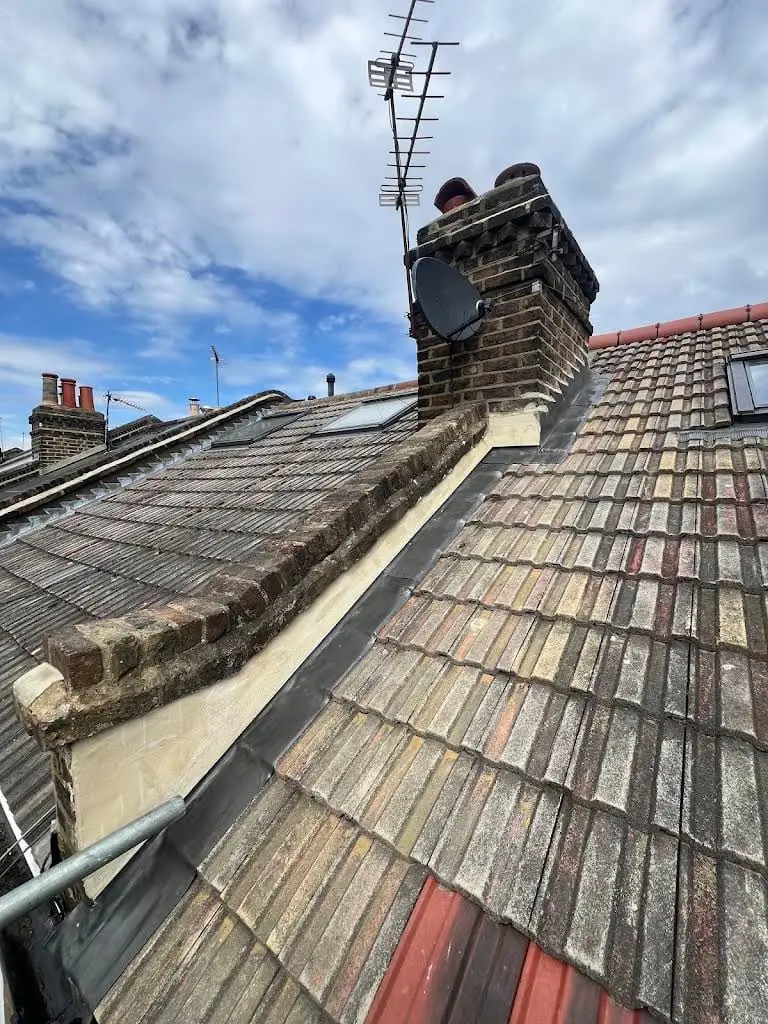
London roofs are rarely uniform. A single street can have handmade clay peg tiles on one house, Welsh slate on the next and concrete interlocking tiles on a 1960s infill. Getting a re-roof right starts with reading what is already there — the pitch, the batten gauge, the lap, and how the roof meets its neighbours.
We strip back, check the timbers, replace anything that has rotted, and re-lay onto new membrane and battens. Ridges and verges go on dry-fixed where that is the right call, and hand-bedded where the look of the building demands it. Valleys, abutments and chimneys are dressed in lead rather than patched with mortar or sealant.
- Rafters and battens checked before re-laying
- Breathable membrane and new treated battens
- Lead valleys and abutments, not mortar fillets
- Salvaged tiles reused where they are sound
What we cover
Pitched roofing, end to end
From a handful of slipped slates to a full strip and re-cover, the same team and the same standard of detailing.
Full re-roofs
Stripping back to the rafters, replacing membrane and battens, then re-covering in tile or slate to a new, clean line.
Slate roofing
Natural and fibre cement slate laid, repaired and re-hooked, with slipped slates traced back to the failed nail rather than just clipped back on.
Tile repairs
Cracked, slipped and missing tiles replaced, and the reason they moved put right so the same tiles do not come down again.
Ridges & verges
Dry ridge and dry verge systems that need no mortar, or traditional hand-bedded ridges where the building calls for it.
Valleys & flashings
Lead-lined valleys, chimney soakers and abutment flashings formed on site to the right code and lap.
Roof ventilation
Ridge, soffit and tile vents added where a roof void is not breathing properly and condensation is forming.
What to look for
Signs your pitched roof needs work
Most tiled roofs give plenty of notice. The trick is knowing what you are looking at from the ground.
- Slipped, cracked or missing tiles and slates
- Fragments of tile or mortar appearing in the gutters
- Daylight visible through the roof from inside the loft
- Damp patches on the ceiling of an upstairs room
- Mortar crumbling from the ridge or the verge
- A ridge line that has started to dip or wave
- Moss holding water on the tiles through the winter
Not sure how bad it is? We will come and look, take photographs from the roof, and tell you what actually needs doing.

How it works
Five steps, no surprises
The same straightforward process whether you need a single tile replaced or an entire roof rebuilt.
- 01
Get in touch
Call, email or WhatsApp us with what you have noticed. We will ask a few questions to understand the property and how urgent it is.
- 02
Free inspection
We come and look properly — including up on the roof where it is safe to do so — and photograph anything that needs your attention.
- 03
Written quote
You receive a clear, itemised quotation explaining the work, the materials and the price. No obligation, no pressure.
- 04
The work
Our own team carries out the job to the agreed programme, keeping you updated with photos and leaving the site clean each day.
- 05
Sign-off & guarantee
We walk you through the finished work, share before-and-after photos and confirm the guarantee that applies to your job.
Pitched & Tiled Roofing FAQs
Your questions, answered
The questions we get asked most about this work. If yours isn't here, just ask — we're happy to explain.
How long does a tiled roof last?
Clay and concrete tiles commonly last 50 years or more, and natural slate can go well beyond that. What usually fails first is everything around them — the nails, the battens, the mortar at the ridge and the lead at the valleys. That is why a roof can need significant work long before the tiles themselves are worn out.
Can you re-roof using my existing tiles?
Often, yes. If the tiles are sound we will take them off carefully, set them aside, renew the membrane and battens underneath, and re-lay them. You normally need to allow for some breakages and a percentage of replacements. On a roof where the tiles themselves are delaminating or heavily eroded, reusing them is a false economy and we will say so.
What is dry ridge, and is it better than mortar?
A dry ridge system fixes the ridge tiles mechanically with clamps and a ventilated batten roll rather than bedding them in mortar. It does not crack or wash out over time and it ventilates the roof, so it needs far less maintenance. Mortar still has its place on period buildings where the look matters, and it can be pointed properly to last.
Do I need scaffolding for a tiled roof job?
For anything beyond a small repair, yes — it is the safe way to work and it lets us do a better job because the whole roof is reachable. Small repairs can sometimes be done from a tower or a roof ladder. Access is priced clearly in your quotation, never added afterwards.
How long does a re-roof take?
A typical terraced or semi-detached roof takes around one to two weeks once scaffolding is up, depending on the size, the weather and whether any structural timber needs replacing. We keep the roof covered and watertight overnight throughout.
Can you match tiles on a period property?
Usually. Between current ranges, reclaimed stock and handmade tiles there is normally a good match available for common London tile and slate types. We will show you what we propose before ordering so there are no surprises when the roof goes back on.

Free quote
Thinking about a re-roof? Start with a proper look.
We will inspect the roof, photograph what we find and give you a written, itemised quote — free, and with no obligation.