

Liquid waterproofing for awkward roofs
Seamless liquid, hot melt and fibreglass systems for balconies, terraces, dormers and the awkward junctions where sheet materials struggle to give you a reliable joint.
- Fully bonded and seamless
- Balconies, terraces and walkways
- Overlays existing sound coverings
- 25 year guarantee
400+ Five-star reviews
Across Google, Checkatrade, TrustATrader & MyBuilder
30+ Years of experience
Roofing and exterior property care across the capital
25 yr Guarantee
Backed by premium materials and skilled workmanship
Free No-obligation quotes
Clear, itemised pricing with no hidden costs


Why liquid
No joints means nothing to come apart
Sheet materials are excellent across an open roof and awkward everywhere else. Around a rooflight kerb, a bank of pipe penetrations, a balcony threshold or a stepped parapet, every change of direction becomes another joint — and joints are where roofs leak.
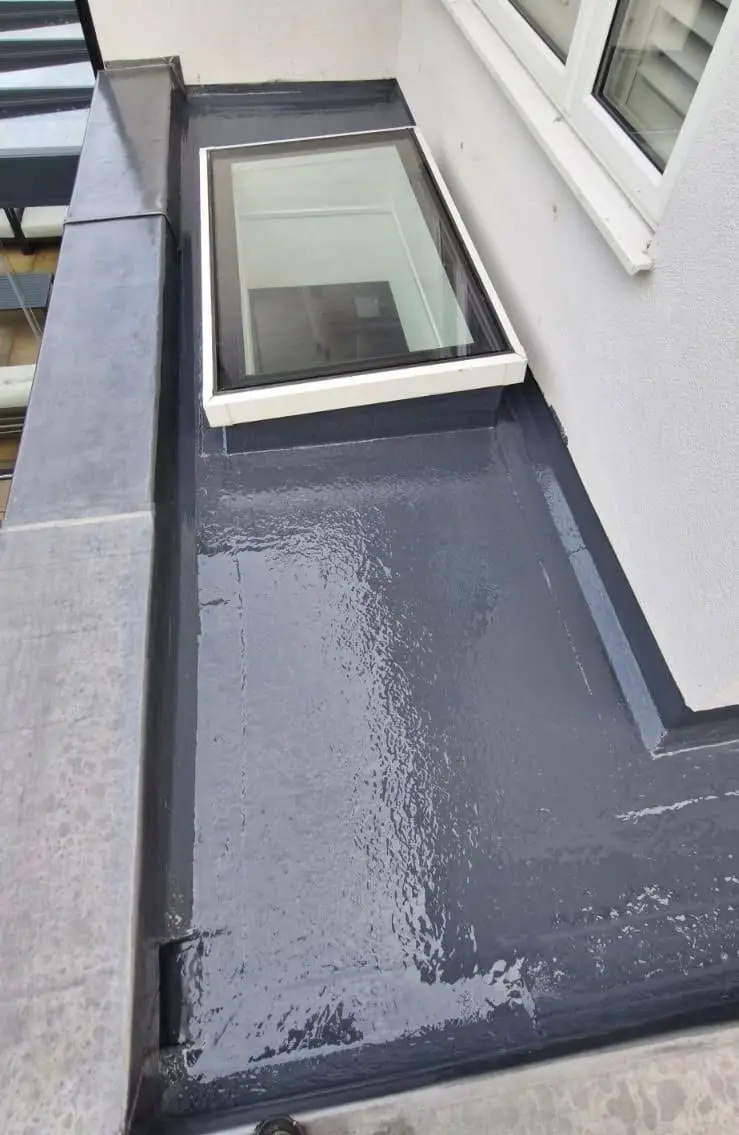
A liquid system is applied wet and cures into one continuous membrane that follows whatever shape is underneath, reinforced at the movement joints and detailed around every upstand and outlet. It bonds to the substrate rather than sitting loose on it, so if water ever does find a way in, it cannot track sideways under the covering looking for somewhere to drop through.
- Cold-applied — no naked flame on the roof
- Bonds fully to the existing substrate
- Reinforced at upstands and movement joints
- Can be walked on and finished with decking
Where it works best
Built for the difficult areas
Liquid systems earn their money on the roofs that are all detail and no open space.
Balconies & terraces
Trafficked finishes that stand up to furniture and foot traffic, with thresholds detailed to the right upstand height.
Rooflight kerbs
Continuous waterproofing carried up and over kerbs, so the most common leak point on a flat roof stops being one.
Dormers & box gutters
Tight, complex shapes waterproofed in one piece where sheet material would need multiple welded joints.
Hot melt systems
Heavy-duty monolithic membranes for inverted and podium roofs where the covering will be buried under a build-up.
GRP fibreglass
A rigid, seamless finish that suits smaller roofs and balconies and takes a hard-wearing top coat.
Overlay refurbishment
Applied over an existing covering that is still sound, avoiding a full strip and the disruption that comes with it.
What to look for
When liquid is the right answer
Liquid is not automatically better than felt or single ply. These are the situations where it genuinely is.
- A balcony or terrace that leaks into the room below
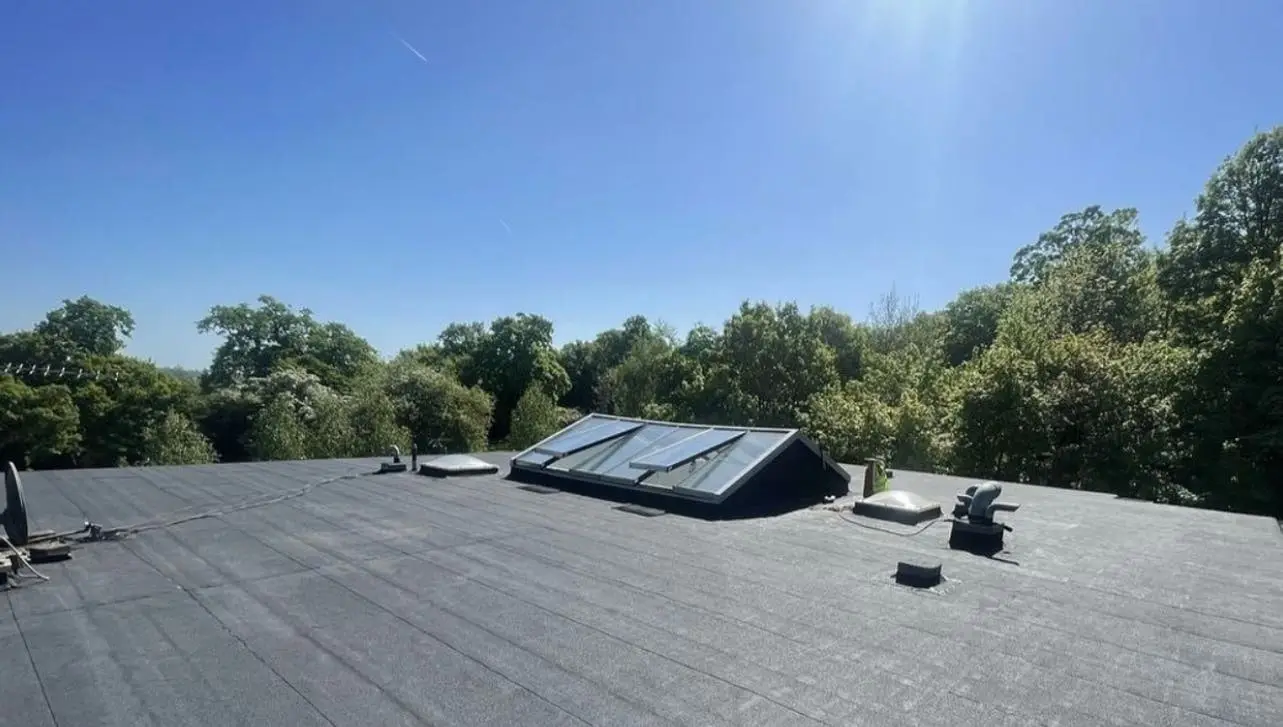
- A roof crowded with pipes, vents and rooflight kerbs
- A stepped or multi-level roof with lots of upstands
- A covering that is sound underfoot but tired on the surface
- A building where hot works are not permitted
- A roof due to be covered with decking or paving
- Repeated failures at the same junction or threshold
We will tell you honestly if a conventional covering would serve you better — liquid is a tool, not a default.
How it works
Five steps, no surprises
The same straightforward process whether you need a single tile replaced or an entire roof rebuilt.
- 01
Get in touch
Call, email or WhatsApp us with what you have noticed. We will ask a few questions to understand the property and how urgent it is.
- 02
Free inspection
We come and look properly — including up on the roof where it is safe to do so — and photograph anything that needs your attention.
- 03
Written quote
You receive a clear, itemised quotation explaining the work, the materials and the price. No obligation, no pressure.
- 04
The work
Our own team carries out the job to the agreed programme, keeping you updated with photos and leaving the site clean each day.
- 05
Sign-off & guarantee
We walk you through the finished work, share before-and-after photos and confirm the guarantee that applies to your job.
Liquid Waterproofing FAQs
Your questions, answered
The questions we get asked most about this work. If yours isn't here, just ask — we're happy to explain.
How long does liquid waterproofing last?
A properly specified and correctly applied system will typically give you 20 to 25 years, and the heavier hot melt systems can last considerably longer. As with any roof, the life comes from the preparation and the detailing as much as the product.
Can it be applied over my existing roof?
Often, yes — that is one of its main advantages. The existing covering has to be sound, dry and well bonded, and any wet insulation or failed deck has to come out first. We check that before recommending an overlay rather than assuming it.
Is it safe to walk on?
Yes, when specified for traffic. Balcony and terrace systems are finished with an anti-slip aggregate or a wear coat, and can also be covered with decking or paving on supports. Tell us how the area will be used and it gets specified accordingly.
Does it involve hot works?
Cold-applied liquid systems do not, which is why they suit occupied buildings, listed properties and anywhere a hot works permit is difficult. Hot melt systems do involve heated material, and we are fully insured including for the application of heat.
How long does the work take?
Most domestic balconies and small terraces are done in two to four days including preparation and cure time between coats. Liquid systems need dry conditions and a workable temperature to cure, so the weather has more say in the programme than it does with sheet materials.
Is it guaranteed?
Yes. Our workmanship is backed by a 25 year guarantee, and the systems we use carry their own manufacturer warranties. Both are set out in your written quotation.

Free quote
Leaking balcony or terrace? We can help.
A free inspection, a clear explanation of what has failed, and a written quote for a seamless fix.